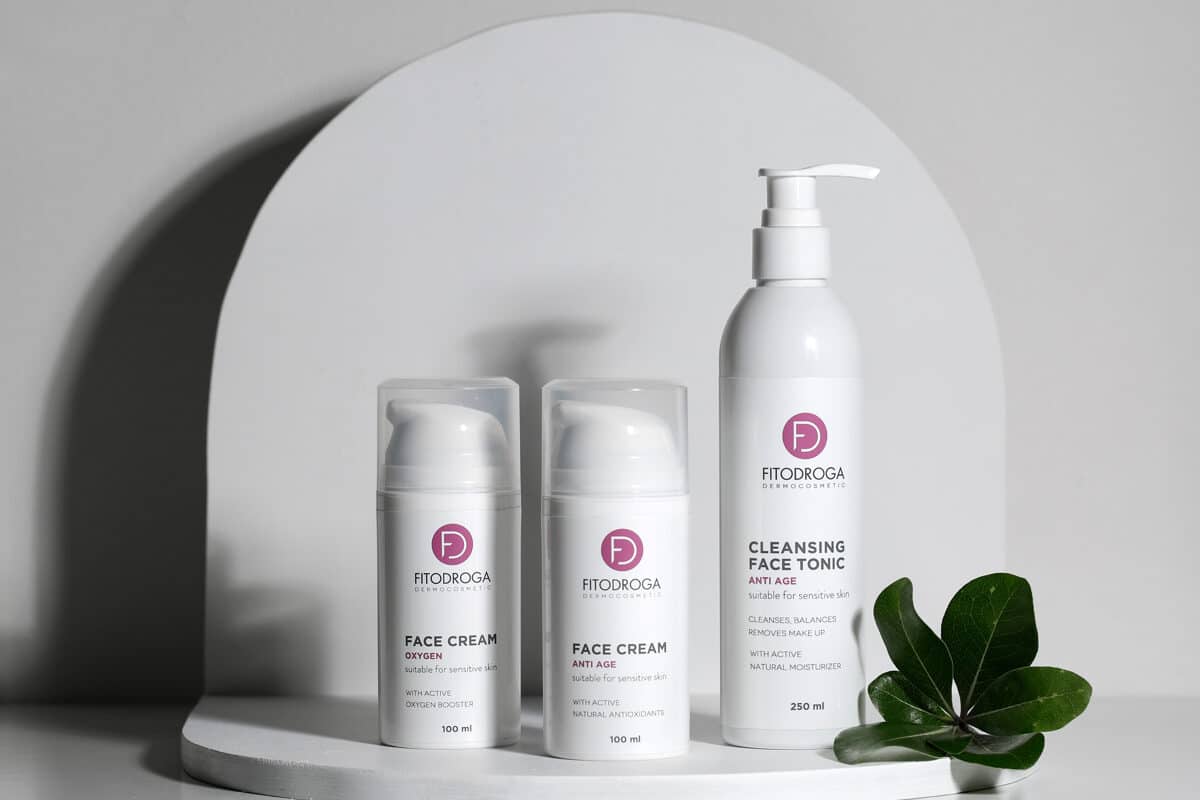

Facial skin is constantly exposed to environmental factors. It functions as a biosensor, responding to all changes in the surrounding environment with the goal of maintaining balance (homeostasis). Sensitive skin reacts particularly quickly to external environmental factors, as it is easily affected by both adverse external environmental factors and improperly chosen skincare products. Environmental conditions can negatively affect the condition of the skin because they interfere with its barrier function. Inappropriately chosen skincare products can also negatively affect the barrier function of epidermis. Consequently, for sensitive skin, it is advisable to use products from a single manufacturer, since such product lines focus primarily on addressing a specific skin condition and, secondarily, products based on different concepts are specifically formulated to contain common ingredients, creating a complementary or synergistic effect.
The key to healthy skin is a healthy epidermal barrier.
The Barrier Function of the Epidermis and Its Importance
The outermost layer of the skin, or epidermis—particularly the stratum corneum—acts as a physical barrier that protects against external environmental factors and prevents transepidermal water loss.
The function of the stratum corneum (physical barrier) depends on both intercellular lipids and the hydrolipid layer on the skin surface. The hydrolipid layer (composed of sebum and sweat) that covers the epidermis has the skin barrier’s strengthening function during changes in the climate, when it is excessively dry or humid.
The stratum corneum also contains 10–15% water, which ensures its elasticity. It is important to maintain this percentage of water. This is ensured by two mechanisms:
- attracted water, which is bound to natural moisturizing factors. Natural moisturizing factors include amino acids, pyrrolidone carboxylic acid, lactic acid, urea, carbohydrates, and mineral ions;
- transepidermal water, which is directly related to transepidermal water loss, or transepidermal flow, which is associated with water evaporation from the surface of the skin and is significantly influenced by relative humidity.
Winter and Its Impact on the Epidermal Barrier Function
During the cold months of the year, the environment has a twofold negative effect on the skin: low indoor humidity and low outdoor temperatures.
Low humidity combined with low temperatures negatively affects the barrier function of epidermis, as it increases transepidermal water loss and reduces the amount of lipids and natural moisturizing factors.
As a result, the skin becomes drier in cold weather, making it more fragile and permeable. The main symptoms, such as dry skin and itching, appear in the winter.
Tips for Skin Care in Cool Temperatures
In cool temperatures, your skin needs special care. As the skin becomes drier, it needs extra moisture and protection from environmental factors.
- In cool temperatures it is recommended to use a moisturizing body cream. Ideally, it should contain ingredients that complement the skin’s natural protective barrier, such as olive squalane. Body lotion is best applied immediately after showering to damp (not dry) skin. If your skin is very dry, it is recommended to use creams more than once a day.
- It is recommended to apply to the skin on your face a nourishing face cream with a rich formula. It should preferably contain ingredients that replenish the skin’s natural protective barrier, such as olive squalane. Keep in mind that you should apply the cream at least 30 minutes before going outside.
- Don’t forget about lip care, too. In cold weather, nourishing lip balms are a better choice. If your lips are chapped, it’s a good idea to apply a special nourishing lip balm before bed. You should definitely avoid licking your lips frequently, as the enzymes in saliva irritate the already delicate skin on your lips.
- The skin on your hands can become particularly sensitive in winter, so you should regularly moisturize and nourish it with hand creams. Ideally, the product should contain ingredients that supplement the skin’s natural protective barrier, such as squalane. When you’re outside, be sure to wear gloves.
- It is also important not to forget to use additional products with SPF. On top of your daily moisturizer, apply a foundation, BB cream, CC cream, or sunscreen that contains SPF. It will protect the skin on your face from ultraviolet radiation, which is essential for everyone, but especially for people with sensitive skin, problem skin (such as rosacea), those participating in winter sports, as well as after various beauty treatments.
- Hot water is also not good for the skin because it dries it out, so it is recommended to bathe for a short time (5–10 minutes) in cooler water. It is recommended to choose special cleansing products (pharmacy-grade products) formulated not to dry out or irritate the skin.
- We recommend choosing products from the pharmacy category, as these products contain fewer dyes and other harmful additives, and their formulas are designed with a focus on addressing specific skin conditions. There are also specially formulated skincare lines for various specific skin conditions, such as sensitive skin, atopic dermatitis, seborrheic dermatitis, psoriasis, and so on.
- It is advisable to ventilate indoor spaces more frequently during cold weather, as this increases the humidity level. Various types of humidifiers can also be used.
Why choose the FITODROGA DERMOCOSMETIC line of face and body care products?
The product development guidelines for the FITODROGA DERMOCOSMETIC brand cover all spectrum of these requirements:
- The product lines have been developed primarily with the needs of sensitive skin in mind to ensure its comfort, and the products within each line, despite their different concepts, are specifically formulated to contain common ingredients, creating a complementary or synergistic effect.
- By using the recommended products correctly and consistently as part of the “three-step daily routine,” a nightly ROUTINE has been developed as a therapeutic option for women to use at home.
- The products were dermatologically tested at the J.S. HAMILTON BALTIC Ltd laboratory and confirmed as “dermatologically tested” and “suitable for sensitive skin” (in vivo)
- Dermatological tests were conducted on the products under the supervision of a dermatologist, while simultaneously testing the product compatibility as part of the three-step program recommended by FITODROGA. (in vivo)